Maka Medical Surgical
Maka Medical Surgical
Maka Medical Surgical
In the modern landscape of orthopedic care and trauma rehabilitation, patient outcomes rely heavily on a seamless synergy between two pillars of treatment: rigid internal fixation (such as titanium plates, interlocking intramedullary nails, and compression screws) and high-performance external stabilization (like advanced fiberglass and polyester orthopedic casting tapes). The global medical community is experiencing a paradigm shift where clinicians no longer view external casting and internal surgical implants as separate modalities, but rather as cooperative elements in a holistic bone healing pathway.
As an established hub for surgical titanium hardware and clinical-grade external fixation materials, our operations meet the highest thresholds of regulatory alignment. For global distributors, healthcare groups, and B2B buyers, sourcing from a CE-certified manufacturer is not merely a box-ticking exercise; it is an absolute guarantee of material biocompatibility, structural predictability, and supply chain accountability. From the high-precision machining of titanium femoral nails to the polymerization kinetics of polyurethane-impregnated casting tapes, clinical safety remains our guiding philosophy.
Historically, Plaster of Paris (POP) dominated orthopaedic casting. However, materials science has paved the way for synthetic composites. Orthopedic casting tapes fabricated from fiberglass or polyester web substrates impregnated with water-activated polyurethane resins have revolutionized fracture care. These synthetic tapes offer up to five times the strength of plaster while remaining a fraction of the weight.
Furthermore, high radiolucency is a critical clinical requirement. Traditional plaster casts obstruct post-reduction X-rays, making it difficult for surgeons to monitor bone callus formation and alignment. Modern CE-certified fiberglass casting tapes allow complete X-ray penetration, enabling clinicians to visualize the healing process clearly without cast removal or unnecessary radiation dose increases. This is particularly vital when monitoring fractures stabilized internally with titanium locking plates or intramedullary nails.
Our casting tapes utilize a proprietary water-activated polyurethane prepolymer. Curing is tightly regulated, maintaining exothermic temperatures below 40°C to prevent thermal tissue injury, while achieving functional weight-bearing strength within 20 minutes.
We implement a multi-axis knit structure for our fiberglass and polyester backings. This multi-directional stretch gives the tape exceptional conformability around complex anatomical curves, such as the ankle joint or elbow, preventing localized pressure points.
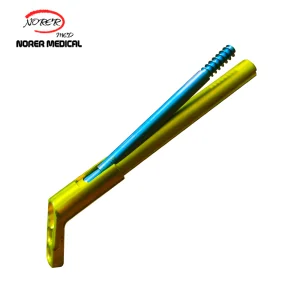
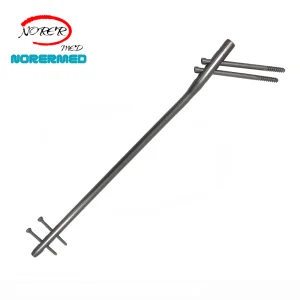
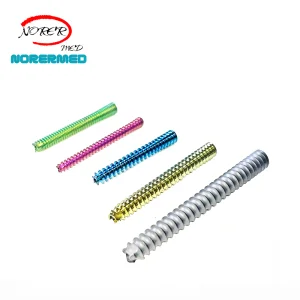
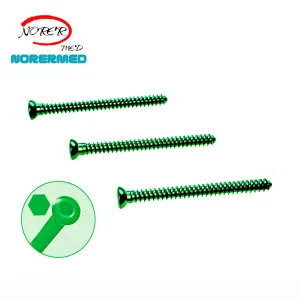
For internal fixation items (such as the FNS Plate, Tibial, Femoral, and PFNA Interlocking Nails), we utilize premium Ti-6Al-4V ELI alloys, providing high fatigue limits, absolute biocompatibility, and optimal elasticity profiles matching human cortical bone.
Navigating international medical regulations demands precision. Under the European Medical Device Regulation (MDR) and globally accepted ISO 13485 standards, manufacturers must prove consistent quality control across all stages of production. In our factories located in Changzhou City, Jiangsu Province, China, quality assurance spans from raw material analysis to final sterile barrier packaging testing.
For our casting tapes, this involves maintaining strict control over environmental humidity within our formulation and packaging areas. Polyurethane is highly hygroscopic; exposure to ambient humidity during manufacturing results in premature polymer cross-linking, reducing shelf-life. Our cleanroom facilities maintain relative humidity levels below 10%, ensuring a guaranteed shelf life of up to 3 years in sealed high-barrier aluminum pouches.
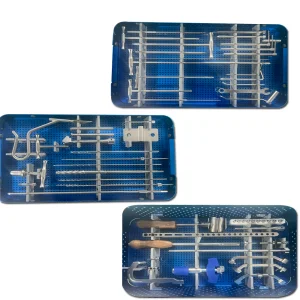
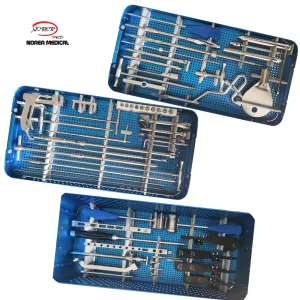
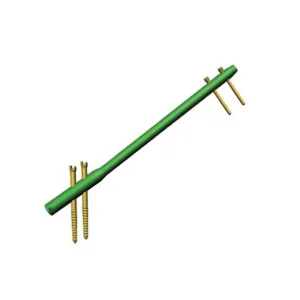
How do internal fixation implants and casting tapes interact in modern surgery? Consider a complex femoral neck or shaft fracture. The primary stabilization is achieved internally using systems like the Orthopedic PFNA Interlocking Nails Instruments Kit or the Femoral Neck Nail Plate Locking Screw System (FNS). These devices provide structural stability, preventing axial displacement and rotation.
However, post-operative rehabilitation often requires external containment, particularly in non-compliant patients, veterinary applications, or cases involving severe soft tissue damage. An external casting tape shell protects the surgical site from sudden impact forces, provides comfort during mobilization, and distributes load during early physical therapy phases.
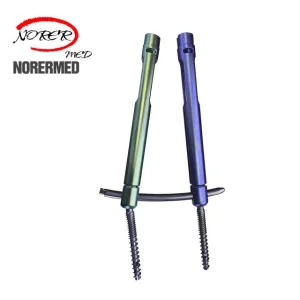
Strategically based in Changzhou City, Jiangsu Province, China—a region internationally recognized as the powerhouse of high-end orthopedic device fabrication—Maka Medical Technology Co., Ltd. stands as a premier developer and OEM/ODM supplier of orthopedic trauma bone plates, bone screws, interlocking nails, spine pedicle systems, PEEK cervical/lumbar cages, and advanced external immobilization casting materials.